Biological layer
Soil and plants
Soil restoration, organic fertilizers, composting, earthworms and beneficial microorganisms. Plant residues return to the production cycle.
Sơn La · Northwest Vietnam
Organic plantations, medicinal plant processing and an eco-resort — an integrated vision for developing the land.
Concept and development plan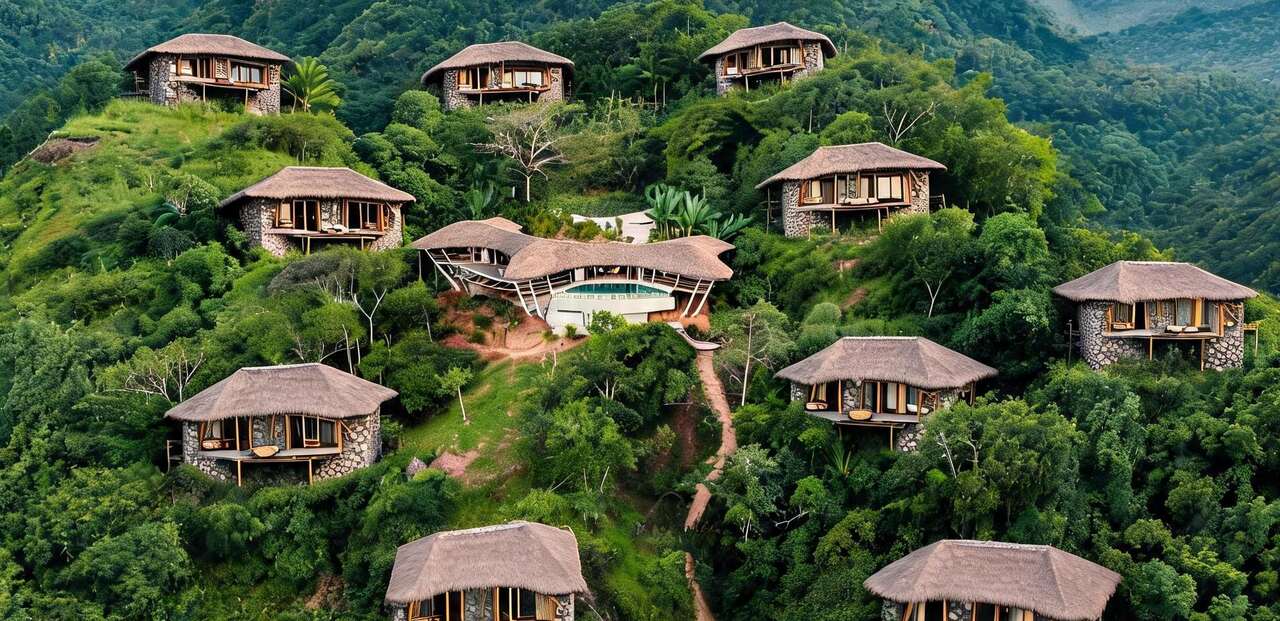
01 / The vision
Tô Múa is built around the productive potential of the land. Plantations supply raw materials for processing, the landscape provides a setting for hospitality, and shared infrastructure connects them.
planned development area
elevation stated in the brochure
from Hanoi, according to the initiator
Concept parameters from the initiator’s brochure, pp. 2, 10 and 17. The area represents a development plan; it does not confirm secured land rights.
The project brings together medicinal plants and organic food, botanical extracts, wellness hospitality and low-rise resort property. Its production core is intended to supply raw materials and ingredients to the pharmaceutical, food and cosmetics industries.
The brochure names the project author as Vu Tuan Thanh, and the local cooperative as Cội Nguồn Tô Múa. The concept envisages local community participation, specialist training, and phased engagement with investment and technology partners.
02 / How the model works
Production, processing and hospitality share resources. Explore the role of each pillar in the concept.
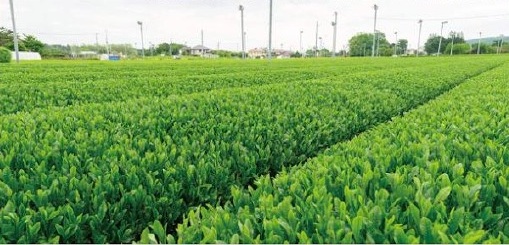 The raw-material base
AGRI / Organic production
Soil restoration, microbial communities and biological crop protection form the proposed foundation for growing medicinal plants and food crops.
JAS, USDA Organic, EU Organic and KFQS are presented as certification goals in the brochure.
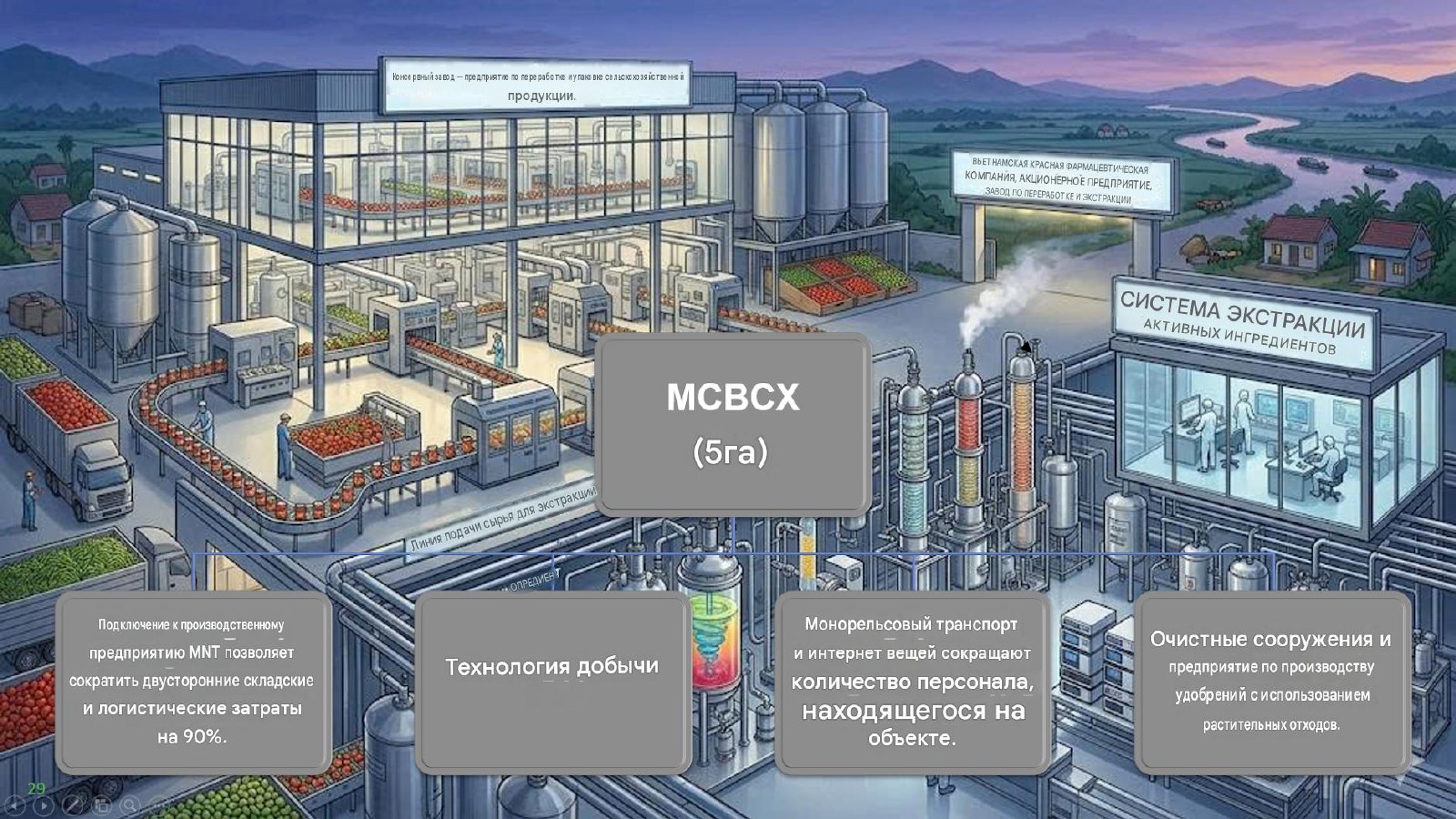 Project illustration · Russian source
BIO / Advanced processing
The planned processing operations would turn agricultural raw materials into extracts and active pharmaceutical ingredients (APIs). The brochure allocates a 5-hectare site to the processing module.
EU GMP is a stated goal. The brochure does not establish current certification or signed supply contracts.
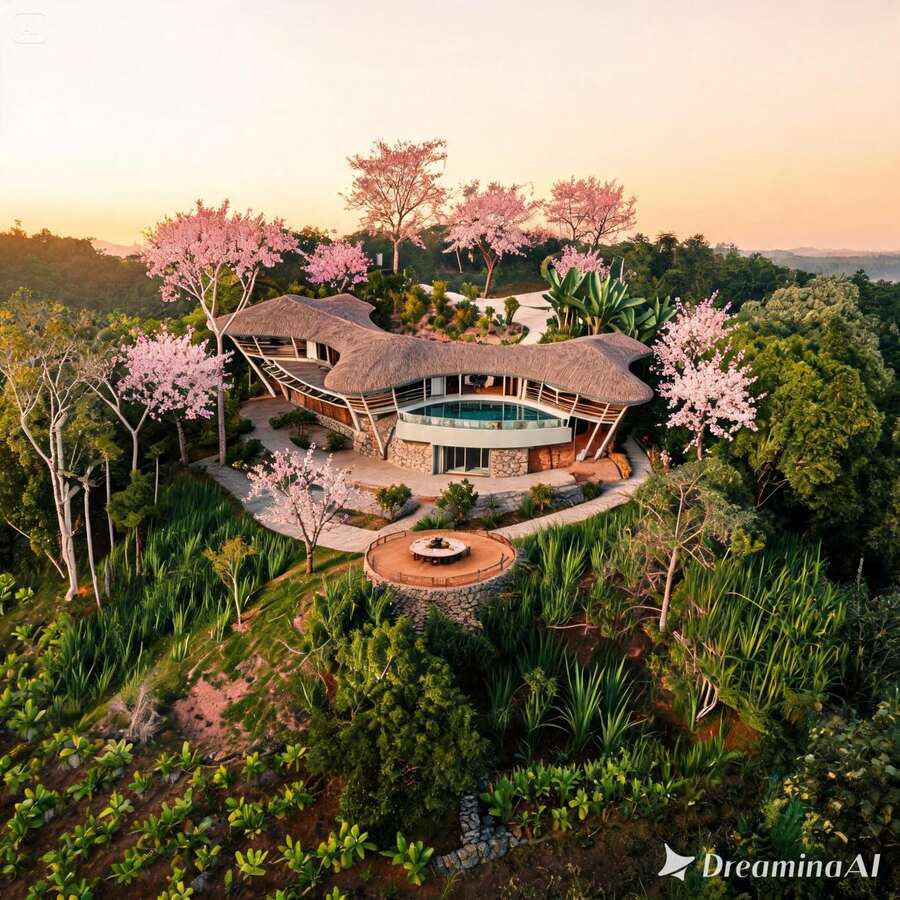 Architectural concept
HOSPITALITY / Eco-tourism
The resort concept extends the landscape: villas, walks to waterfalls, and opportunities to discover plant cultivation and highland culture.
All properties are presented as concepts. Services and ownership arrangements are subject to project documentation and contracts.
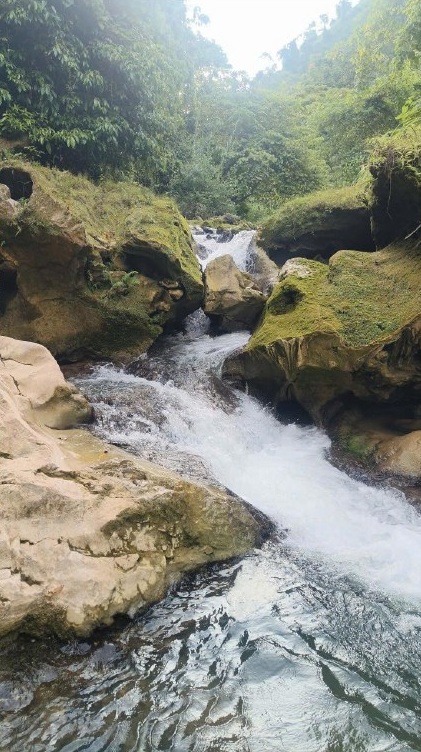 Photograph from the site survey
LIVING / GAIA Organic Eco Village
The GOEV eco-village concept combines housing, utilities and community infrastructure. In the project strategy, a high-quality living environment helps attract employees, researchers and specialists.
Development concept from the brochure, pp. 7, 25 and 33–39.
03 / Sense of place
Vân Hồ area, Sơn La province. Mountain terrain, forests, streams and waterfalls form the natural setting for the Tô Múa concept.
Accessibility depends on infrastructure development. The brochure identifies an approximately 7 km access road to be developed. Journey times and road completion schedules require an update.
04 / The production system
The technology concept combines soil biology, operational automation and data. Its goal is to manage quality from the growing area to the finished ingredient.
Biological layer
Soil restoration, organic fertilizers, composting, earthworms and beneficial microorganisms. Plant residues return to the production cycle.
Operational layer
Mechanization, irrigation, sensors and the Internet of Things. Shared logistics, resources and production modules are intended to support coordinated operations.
Data layer
Multispectral drone surveys, centralized monitoring, ERP and AI tools are envisaged as part of a real-time management system.
The brochure shows a cascading aquaculture concept with 7–10 pond levels, water treatment and recirculation. It combines production with a visitor route. This is a conceptual diagram, not evidence of a completed facility.
Connecting fields to processing, reusing organic residues and sharing logistics are intended to reduce resource losses. The quantitative effect needs validation in a technical model.
JAS, KFQS, USDA Organic and EU Organic certification are project goals. EU GMP is the stated target for processing. The production concept includes control of processes, raw-material origins and product quality.
Each certification status must be supported by current documentation. Listing standards does not mean certification has already been obtained.
The strategy envisages allocating at least 4% of revenue to R&D once profitable. Priorities include biotechnology, methods for isolating active compounds, joint research and specialist training.
The initial model focuses on B2B and OEM supply. Developing proprietary products and the GAIA brand is considered a subsequent step.
Technology concept: brochure, pp. 20–21, 25–30 and 39. The solutions described are planned areas of implementation.
A proposed participation format
One proposed format is a one-hectare module where a place to stay sits alongside medicinal plants cultivated under professional management.
The brochure also refers to properties on 1–2 hectares. The final configuration depends on the layout, permitted land use and transaction terms.
medicinal plants
villa
garden
Example from the brochure, p. 19. This describes a concept; it is not an offer to sell a specific plot or confirmation of ownership rights.
05 / Investment rationale
The central idea is to establish the agricultural base, develop processing, and then build services and a community around productive operations.
Medicinal plants, vegetables and other agricultural produce. The strategy includes proprietary sales channels and restaurant formats.
Added value from processing raw materials and supplying food, cosmetics and pharmaceutical manufacturers.
Resort property, rentals, agritourism and educational programmes as areas of development around the production core.
Illustrative funding structure
The brochure illustrates capital allocations of $8 / $12 / $16 million. Participation terms and the use of funds are subject to separate discussion.
Structure shown on p. 22. Page 17 uses a different parameter: $33.9 million in year-zero capital and $5 million in minimum initial project capital. These figures need reconciliation within one financial model; they do not represent an individual investor’s minimum commitment.
The brochure presents a ten-year forecast for medicinal plant production and extraction. The calculation begins in year three, following development of 1,000 hectares and completion of the processing plant; it excludes property and resort tourism.
It states average annual profit of $113 million, year-ten assets of $1.14 billion, NPV of $574 million and a 2.22-year payback from the start of the calculation period. The slide also lists a 142% metric whose exact definition should be checked against the financial model.
These are the author’s projections, not operating results or a promise of returns. Assessment requires underlying cash flows, crop yields, extraction rates, selling prices, costs, taxes, financing and scenario analysis. The villa example on p. 19 contains inconsistencies in the usage calendar and income allocation calculations.
Development roadmap
The brochure describes a sequence of preparation, construction and expansion. Each transition should depend on readiness of the preceding stage.
Soil, climate and geographical studies, engagement with local authorities, mapping and land arrangements. The initial survey area is stated as 900 hectares.
Access road, water and energy supply, agricultural modules, a processing site and shared resources.
Planting, soil restoration, processing, quality control, certification and sales arrangements.
Eco-village, villas, tourism and research. The brochure’s wider strategy extends to a horizon of 15 years.
Editorial grouping based on pp. 16 and 38. This is the concept’s sequence, not a report of completed work. The schedule and current status require separate confirmation.
Envisioning Tô Múa
Conceptual renderings from the project materials.
Investor questions
Key answers based on the materials provided.
The brochure describes a concept and investment model, with site survey photographs and architectural renderings. It mentions studies and consultations, but does not include a document pack establishing current land rights, permits or construction progress. Implementation status should be verified against current documents.
This page presents proposed formats. It does not contain a confirmed public offer, available-property inventory, individual investor minimum or subscription documents. Participation, rights, timelines, management and exit arrangements are subject to separate agreements.
They share land, infrastructure and an operating system. In the concept, agriculture produces marketable goods, processing adds value, and the landscape and working plantations provide a basis for agritourism and resort stays.
Corporate structure, evidence of land rights and permitted use, permits, a development schedule, engineering concepts, a financial model with its underlying assumptions, a certification strategy and sales-channel information. Participation terms, profit allocation and exit arrangements should also be documented.
The villas and resort complex in the brochure are renderings of the proposed design. Waterfall photographs come from the site survey. These image types are labelled separately.
06 / Explore the materials
The Russian-language Tô Múa brochure covers the land development concept, production, technology, participation model and long-term strategy.
Download brochure (RU) Open in browser ↗